Boolean Search Is Good for Nothing!
Does Boolean ring a bell? It’s the language that grew out of the work of logician and algebraist George Boole — and it lets us interrogate a search engine. IT’S A COOL SOURCING THING… that little extra that lets us feel like we know something the uninitiated don’t. It’s the sourcer’s wow effect. Building a beautiful Boolean string is like saying to a layperson: hey, look! I know how to talk to Google. Can you?
It tickles the inner geek… and from a distance, through the fog, it almost makes you look like a developer.
More seriously: Boolean is a language that lets us build precise queries and interrogate the web to extract its substantive marrow.
Does not knowing Boolean prevent me from finding information?
Of course not. If I want to look up the TGV schedule from Paris to Marseille, I can just ask Google directly — and I’ll get my answer.
What if it’s a Product Manager at Unilever I’m looking for?

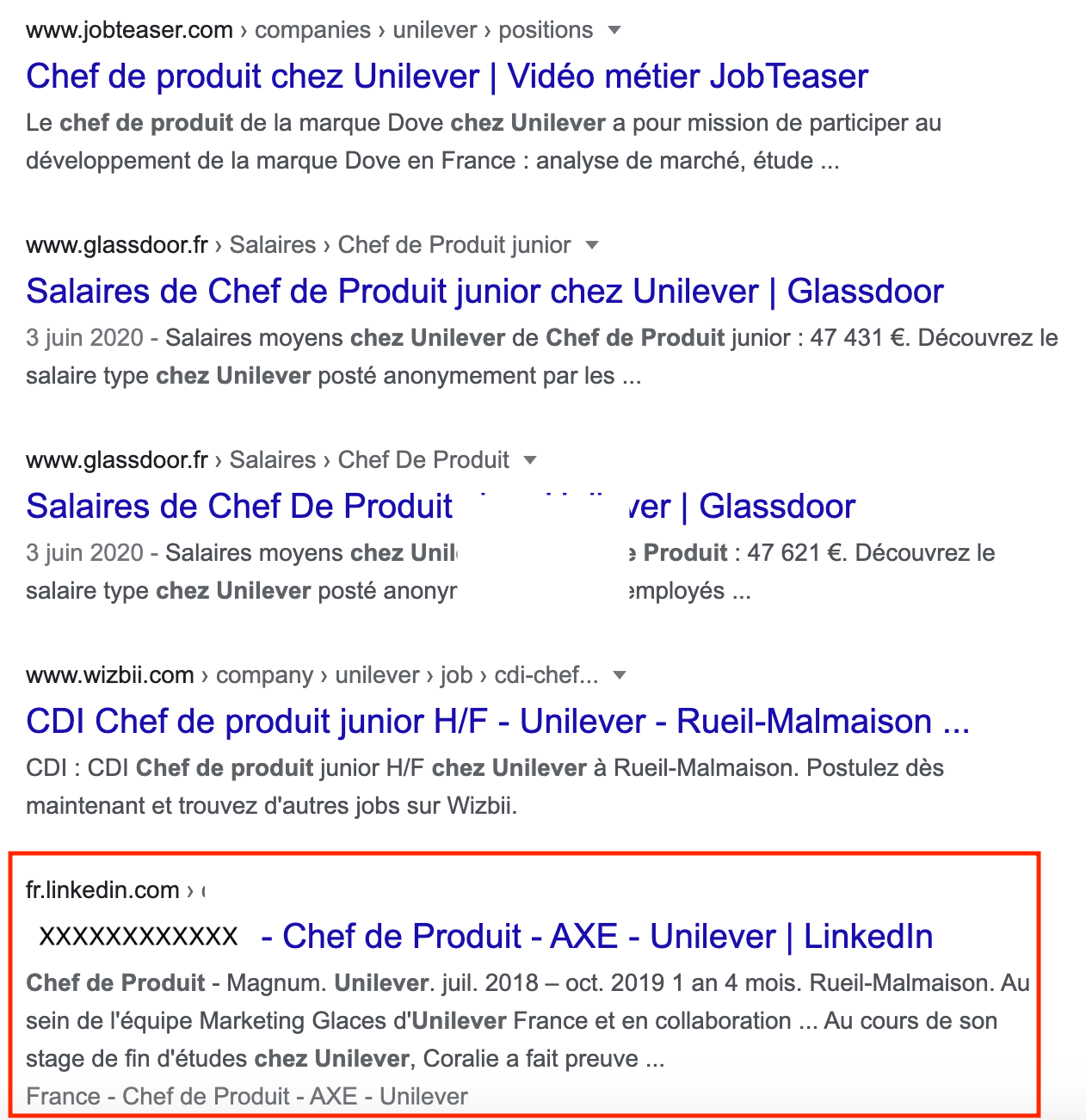
I find them too — but with far less relevant results mixed in.
Why?
Google, like most search engines, has been moving toward natural language. Over the last decade, research in natural language processing has made enormous strides. Abundant data, self-learning algorithms, and raw computing power have fuelled stunning progress — benefiting services like Alexa, Siri, Google Assistant, and the relevance of results from engines like Bing and Google.
Because yes — asking Google or Bing “when does the post office in my town open?” is a query. And if it now seems natural and obvious to get a relevant answer, it wasn’t always so.
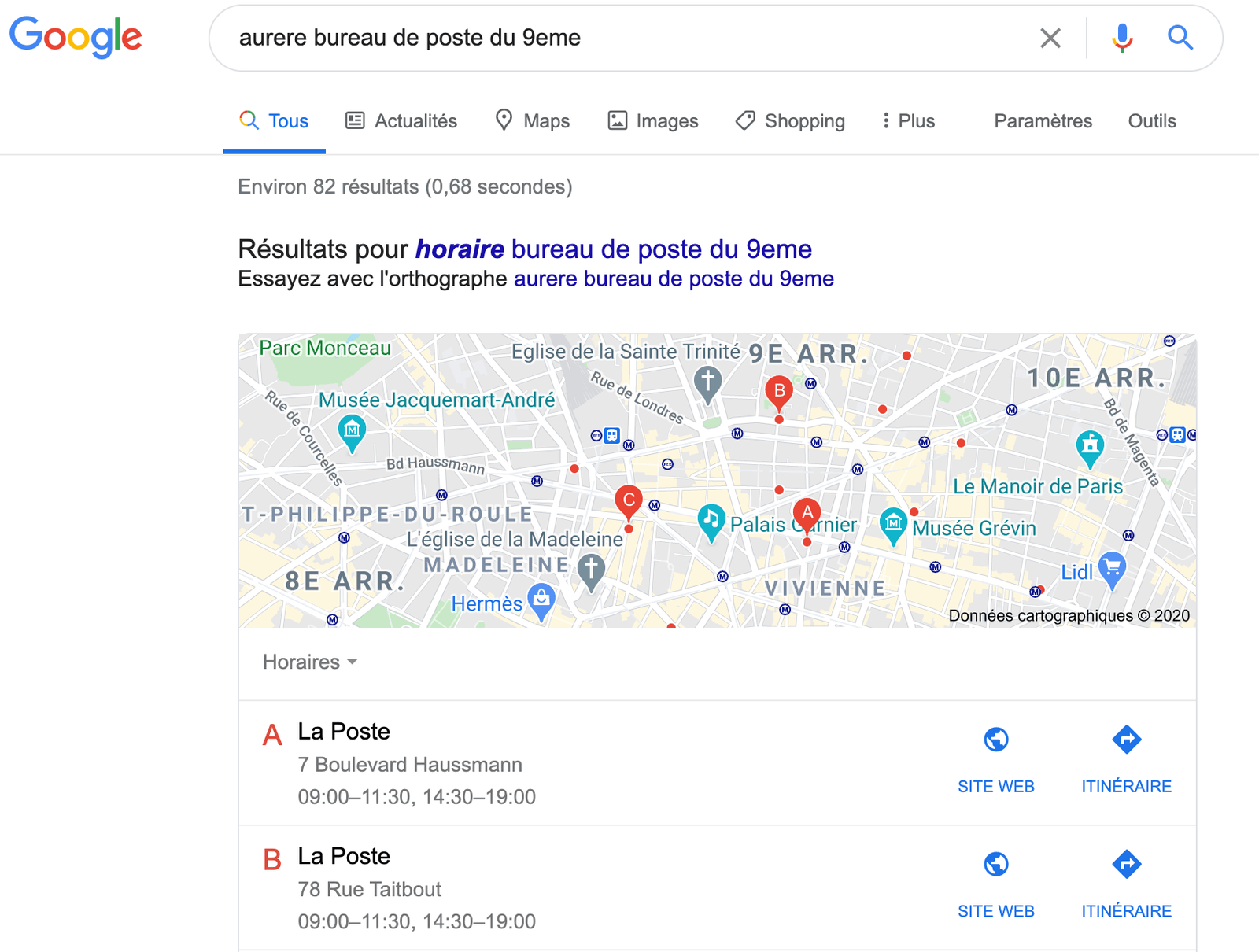
The search engine, ever smarter, now even understands queries with spelling mistakes.
Every day, Google and Bing inch a little further, bringing their share of innovation and, above all, ever greater precision.
In this light, we might ask how long Boolean will remain useful in these dominant engines.
And from there to saying that Boolean is now completely pointless — it’s just one step.
Why bother with a string of obscure, unsexy operators?
Boolean fluency — is it just a distinguishing mark reserved for a club destined to disappear?
Sure, mastering Boolean will let you compete in hackathons… and who knows, maybe win one, land on a leaderboard, and earn the recognition of your peers.
Let’s admit it once and for all: our most beautiful Boolean strings, the most complex and polished ones, are usually produced during those famous hackathons and sourcing games — competitions bringing together sourcers from around the world.
“If you don’t know Boolean, you’re not a real Sourcer.”
Without ever going quite that far — the sourcing community is kind-hearted — each person waves their Boolean fluency like a banner, a badge to have. Boolean ergo Sum.
Yet with the advances made in natural language, it’s likely that Boolean will eventually disappear from mainstream search engines.
Didn’t LinkedIn already experiment with this? True, the platform reversed course after protests from its users — but regularly, certain advanced operators are quietly retired, relegated to oblivion.
In LinkedIn’s case, given the enormous effort the platform puts into codifying and normalising each field, it’s probable that Boolean search will eventually disappear from there again.
Poor sourcers… what will become of us?
Sourcing is far more than doing Boolean. Plenty of excellent sourcers, researchers, and recruiters do remarkable search work without knowing the advanced operators inurl:, intitle:, or more:p:metatags-twitter_title: — and yet they source. And their results are far from laughable.
I’ve been in that category myself, and I always worked on rare profiles — low-visibility, hard-to-find people: expert in automotive air-cooling systems, TPM maintenance project manager in bottling, Data Scientist expert in digital marketing who could pitch in pre-sales and present to a board, Director of CRM projects specialising in Adobe Campaign. And more. I carried out those searches without knowing Google’s, Bing’s or Yandex’s advanced operators.
What I did have was a methodical approach: each time, I mapped the ecosystems in which the targeted skills existed, then once I’d pinpointed the ecosystem(s), I mapped the sector by cataloguing the most significant companies (a classic Pareto — roughly 20% of firms account for roughly 80% of a sector). Once that targeting was done, all that remained was identifying the expected competencies.
No complex Boolean strings — quite the opposite. When I find myself building complex Booleans, it’s usually a sign that I haven’t been rigorous enough on the investigative methodology, and it’s past time to get back to basics.
The basics: “Who am I looking for?” and “Where will I find them?” Because at the risk of stating the obvious — to find something, it’s not enough to search for it. You also need to know precisely what you’re looking for, and especially where you’re looking. In other words: to find something, you need to understand it. When we play “Where’s Wally?” we know what he looks like. Let’s not forget — nothing looks more like Wally than Wally.
If we can’t answer these questions, we risk searching for a long time. To find, we need a precise idea of what we want to find — and above all, where we’re going to find it.
In other words: the hardest part isn’t identifying or searching for “the Profile” — it’s targeting the ecosystem where the competencies live. Not too broad, not too narrow. A subtle balance.
Recruiting is like fishing.
We can fish with a net or with a harpoon. In either case, without a prior plan of action, we may take action — but those actions risk being inefficient.
It’s more likely to spot a lion on the savannah than in a European forest. Does that mean it’s impossible to see one at Fontainebleau? No — occasionally a zoo or circus does lose one. But let’s be honest: basing the success of a search on that scenario is absurd. The same is true for sourcing and recruiting.
Before we rush to this platform or that one — even if we’re told that two-thirds of the active population is on it — let’s ask ourselves a few questions about how we plan to conduct our search.
Method and objective: target, identify, and approach prospects to turn them into candidates, then evaluate them against the client’s project and guide both parties through a process of determination.
Boolean is just a tiny cog in the machine.
Beyond the magical evolution toward NLP (Natural Language Processing) — Boolean is not our only source for finding relevant profiles.
LinkedIn makes us short-sighted, appearing too often as the sole sourcing channel. Meetup, GitHub, Reddit, Stack Overflow, Twitter, Medium — these are all networks that can serve as sources of inspiration depending on the search.
Take the example of a search for a NodeJS and React developer. I can obviously source on LinkedIn: a few keywords in the search bar and I get results.
So what? Why isn’t that approach enough?
This approach is limiting. Not all profiles always specify the languages or technologies they work with — the keyword approach makes you miss many profiles who could nonetheless be relevant.
And because you’re not the only one looking for these skills, you’ll need to deploy much more energy to get the attention of prospects who are easily identifiable and heavily solicited.
Fair enough — but how?
If I know there’s a platform hosting events built around shared interests — communities that meet to discuss specific subjects — and there’s a group focused on the technologies I’m looking for, wouldn’t it be worth investigating?
It’s a safe bet that someone who regularly attends NodeJS events is either a developer interested in those technologies — or a smart recruiter, just like you, looking for the same skills.
In that case, the approach would be: target the Meetup group of interest, capture the data with a scraper — InstantDataScraper works perfectly — pull attendees from several events, filter to keep only the most frequent attendees, build a list, then rematch it against LinkedIn and/or GitHub to enrich it, reconstruct career paths and get contact details.
That enrichment can be done — depending on volume — via a simple profile Google search, or automatically for large lists via PhantomBuster.
In this case: no Boolean — or very little.
But wait — if we’re going to end up on LinkedIn anyway, why all this gymnastics?
Simple. Among the profiles sourced this way, some are what we call “skeleton profiles” — profiles showing little or no information. Information we’ll have gathered from another channel.
LinkedIn, in this case, lets us enrich the profile with a few data points and form hypotheses about experience. And above all, it offers a contact lever — sometimes more effective than the contact options offered by the original platform.
The other advantage of finding these “skeleton profiles”: they’re generally less solicited. And therefore sometimes more willing to respond.
This example applies to other platforms and communities: GitHub, Stack Overflow, Gitlab, HackerRank, Kaggle, DataScienceCentral, Google Scholar, Trailhead Salesforce, and many more. The web offers inexhaustible sourcing deposits of infinite richness.
But back to Boolean.
Knowing Boolean means having the tools to constrain a search engine and direct the query toward exactly where you want it to go. In other words: it means taking back control.
Taking back control?
While it’s easy to obtain a list of operators, it remains quite complex to understand precisely how search engines work.
Google indexes only 6% of the web — and yet it already indexes several billion pages.
More concerning is understanding how the search engine references pages, and ultimately what determines a page’s ranking.
It’s a complex subject, and the available documentation is Delphic at best.
An even thornier issue: while it’s accepted that we can’t have 100% usable results, some simple queries return very strange results when they should be equivalent.
A concrete example:
It’s commonly accepted that the AND operator can be replaced by a space, and that they therefore have the same meaning.

87 results, of which 21 URLs link to LinkedIn profiles — the rest are pages where those three words appear somewhere.

115 results, of which 19 URLs link to LinkedIn profiles — the rest, again, pages where the three words appear.
In both examples I asked Google to return pages containing at least one occurrence of the terms “sourcer paris linkedin” — results should be pages containing those three words, regardless of where on the page.
If we look at the volume of results, the first query appears more limited (87 results) than the second (115 results).
More curiously still: when we compare the results, we find only 20 results in common across the two queries — and of those 20, only 12 identical LinkedIn profiles.
To get there, we retrieved the results of each query and compared URLs using the MATCH function in Google Sheets (which searches for an element within a specific range).
This seems to refute the equivalence of AND and the space operator.
Even stranger are the results when we introduce the site: operator.

The results of this search are equally curious. This query is more restrictive from a Boolean standpoint than the first — so it should give us fewer results.
In the first case, I was asking Google for all pages containing “sourcer paris linkedin”. In this example, I’m asking it to return only pages from the domain “linkedin.com/in” containing the words “sourcer” and “paris”.
And again, when I replace the space with AND, I get a different number of results.

I’ve completely lost the plot. I’ve got the Booleans!
Is Boolean dead? Given my results, the question isn’t so absurd. How can I be sure, when I run a search, that I have the full set of existing results — or even the most relevant ones?
Given these examples, the answer is unfortunately: nothing guarantees it.
This is the limit of a system that rests on a shared belief: that Boolean lets us query a database “neutrally.” But as we’ve seen, search engines interpret and extrapolate our queries. Neutrality is a chimera.
There is no such thing as a “neutral search” anymore.
The validity of a result rests above all on the trust we place in the search engine — like currency, law, or commerce, it’s a social consensus on which we all rely. The system holds because everyone believes in it.
Fine — but how do I source, then?
Sourcing is targeting, identifying, and approaching.
The foundation of sourcing is research. In any research work, bibliography is a central task, often underestimated by the novice. That bibliographic work is, for us sourcers, the upstream targeting work — the effort to understand where and how the profile we’re looking for exists. In other words: before rushing toward keywords, take the time to understand the ecosystem, the stakes, and the profession of the profile we want to source. Without that preparatory work, there’s no relevant targeting — and no efficient sourcing.
This also invites us to question our sourcing habits and certainties.
Concurrently with the writing of this article, an exchange with Guillaume Alexandre about LinkedIn profile indexing on Google shed new light on our certainties about indexing — and more broadly about how Boolean actually works in our searches. I borrow here the “sourcer paris LinkedIn” example that Guillaume used at SosuV on LinkedIn Ranking and its implications for personal branding.
Corpus · envois mensuels
Lire la suite par email.
Sourcing, méthode, gouvernance. Un envoi par mois, jamais plus. Articles longs, sans script ni sponsor. Désinscription en un clic.