Google Scholar PSE – How it Works?

Google Scholar indexes the academic profiles, publications, and citations of millions of researchers worldwide. Each Scholar profile is public, structured, and consistently formatted — making it an excellent sourcing surface for R&D, scientific, and academic talent.
How is this PSE/CSE built?
This CSE combines two layers:
- An X-Ray of Google Scholar —
site:scholar.google.com— to restrict results to the Scholar domain - A “person” restriction based on schema.org structured data, to surface researcher profiles specifically rather than article pages
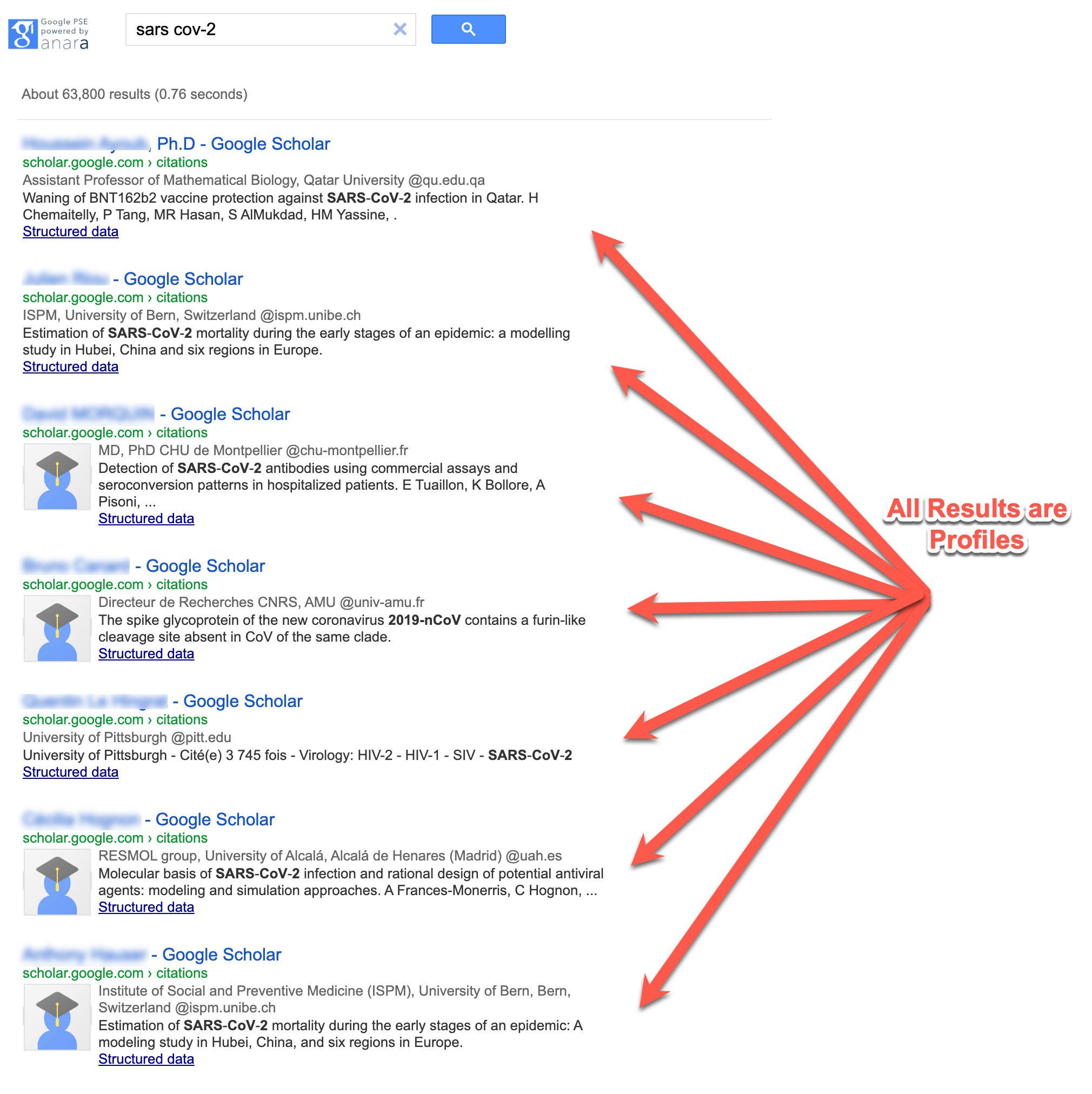
With Google PSE/CSE, we can query structured data directly from Google’s index — enabling much more precise targeting than standard search.
Which advanced operators can we use?
Profile operators
Role:
more:p:person-role:"title"
Queries the researcher’s current title or role as declared on their Scholar profile.
Organization:
more:p:person-org:"organization"
Queries the institution the researcher is affiliated with.
Snippet / Research interests:
more:p:Itemlist-itemlistelement:"keyword"
more:p:Itemlist-itemlistelement:machine*learning
Queries the researcher’s declared research interests — the tags visible on their Scholar profile page.
Note on spaces: The
more:p:operators do not support spaces. Use:
*for AND (equivalent to a space in standard Google search)|for ORExample:
more:p:Itemlist-itemlistelement:machine*learningfinds researchers with both “machine” and “learning” in their interests.
Access the PSE
Also available on freesourcingtools.com
Corpus · envois mensuels
Lire la suite par email.
Sourcing, méthode, gouvernance. Un envoi par mois, jamais plus. Articles longs, sans script ni sponsor. Désinscription en un clic.