Market Mapping: Revealing Hidden Talent
Discover how Market Mapping enriches sourcing by helping you identify hidden talent — invisible until now. Like Thomas, embark on an adventure beyond keywords.

A story of treasure and talent
Once upon a time…
Once upon a time there was Thomas — a young explorer for the modern age. His eyes still held the spark of those who believe in mystery and have the audacity to dream of epic adventures. In a world where everything seems mapped, catalogued, indexed and digitised, Thomas kept his unshakeable faith in adventure.
One evening, in an old tavern, Thomas met Henry — an old sailor drowning his sorrows. Glass after glass, confidence after confidence, the two men struck up a friendship. With loosened tongues and shared dreams, the evening drew to a close. Henry, moved by the young adventurer’s candour, handed him a mysterious rolled-up map. “My young friend,” he murmured in a hoarse voice, “here is a priceless treasure. This map belonged to Rackham the Bellicose, the most fearsome pirate these seas have ever known. I am too old now for this quest, but you have your youth and your courage.”
From promise to disillusion
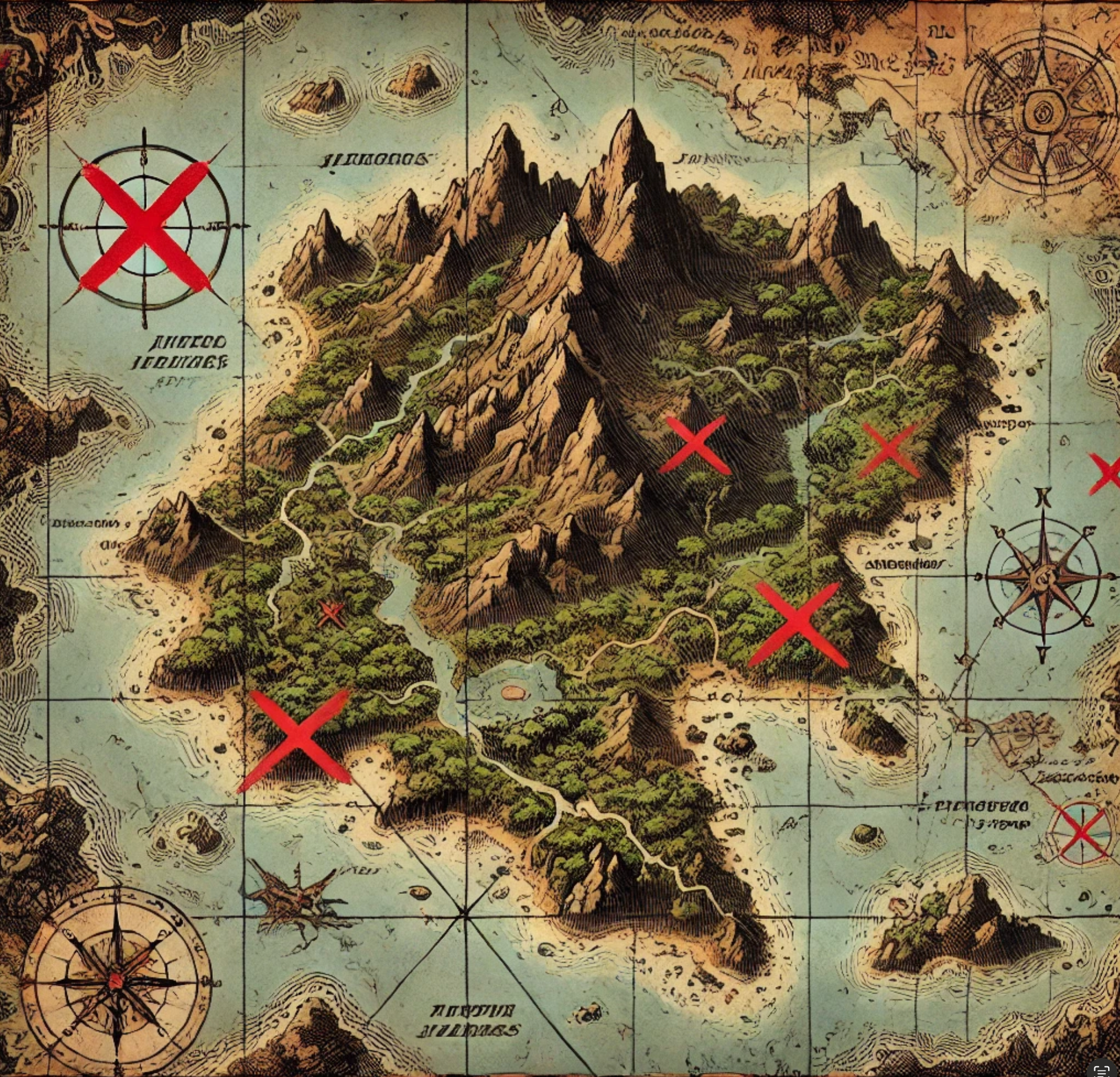
Heart pounding, Thomas hurried home, clutching the priceless gift. Before his astonished eyes, the Map revealed itself — scattered with carefully drawn crosses, each marking, according to legend, the location of part of the treasure. Thomas’s pulse raced, and the next morning he set sail for the adventure of his life, giddy with excitement at what he would find.
The voyage took weeks, but one fine morning he finally landed on the long-dreamed-of island. Armed with the latest GPS and sophisticated geolocation apps, our hero launched into exploration with the confidence of youth and the certainty that technology would not let him down.
The first days were promising. At each marked point, Thomas discovered something: here an old Spanish coin, there a jewel tarnished by time. But as the weeks passed, enthusiasm gave way to doubt. The “treasures” were mere scraps, fragments of no real value. Each new cross brought fresh disappointment.
The young man began to doubt. His eyes lost their gleam, his shoulders slumped under the weight of failure. He pressed on nonetheless, methodically checking each point, each set of coordinates, like an automaton following its programming.

The encounter that changes everything
Around a steep bend, he met Alfred — an old man sitting on a rock, contemplating the horizon with the serenity of someone who has understood life’s secrets. Seeing the young explorer’s despair, he smiled.
“My boy, I’ve been watching you for days,” he said gently. “You look at the points on your map like a prisoner looks at the bars of his cell. But what do you see between those points? What is there in those spaces you’re overlooking?”
Thomas frowned. “There’s nothing between the points,” he replied. “The map shows me where to search.”
Alfred let out a soft laugh. “The real map is in what isn’t written, my boy. Rackham was clever. He didn’t mark the treasures — he marked the clues to find them. Look at the whole. See the patterns. Understand the terrain.”
Beyond the marked points
Those words resonated in Thomas’s mind for days. He began to observe differently. The points were no longer destinations but clues. He studied the relief, the sea currents, the direction of the winds. Little by little, a new pattern emerged.
After weeks of observation and analysis, Thomas finally understood. The crosses formed a pattern — invisible at first glance — pointing to a hidden cove. It was there, in a cave the tide uncovered for only a few hours each day, that he discovered the true treasure of Rackham the Bellicose.

From treasure to talent: the sourcing metaphor
This story, friends, is our story. Our searches are comparable to our young adventurer’s quest.
Our keywords are the crosses on the map — precise but limited. They show us the explicit: what is there, neither more nor less. And yes, it works… sometimes… often, even. But let’s be honest — on scarce, rare or atypical profiles, this approach quickly shows its limits.
Like Thomas, we must learn to see beyond keywords, to understand the currents shaping our industries, to spot patterns invisible at first glance. Because the real talent, like the most precious treasure, is not always found where the crosses tell us to look.
What does not exist is, by nature, invisible — and that is where the treasure hides, in the spaces between the points. Market Mapping is the art of seeing beyond the obvious markers, of understanding the terrain as a whole, of accessing implicit information and not just the explicit.
Why talk about exploration to talk about sourcing?
I love analogy — that association of ideas that can sometimes make complex concepts simple. Like Thomas on his island, we navigate digital terrain every day in search of those rare profiles who will make the difference for our clients.
And like him, we sometimes tend to focus only on the marked points on the map — those famous keywords that make up our Boolean strings — forgetting that the real treasure is sometimes hiding where nobody thinks to look.
Market Mapping, or the art of seeing beyond keywords
Market Mapping is the approach that consists of mapping your market — understanding your ecosystem before you even begin searching for profiles. It’s a bit like our friend Thomas, instead of blindly following his map, taking the time to study the island’s geology, its sea currents and its history.
Let’s take a concrete example: you’re looking for a CRM expert in the pharmaceutical industry who knows Veeva.
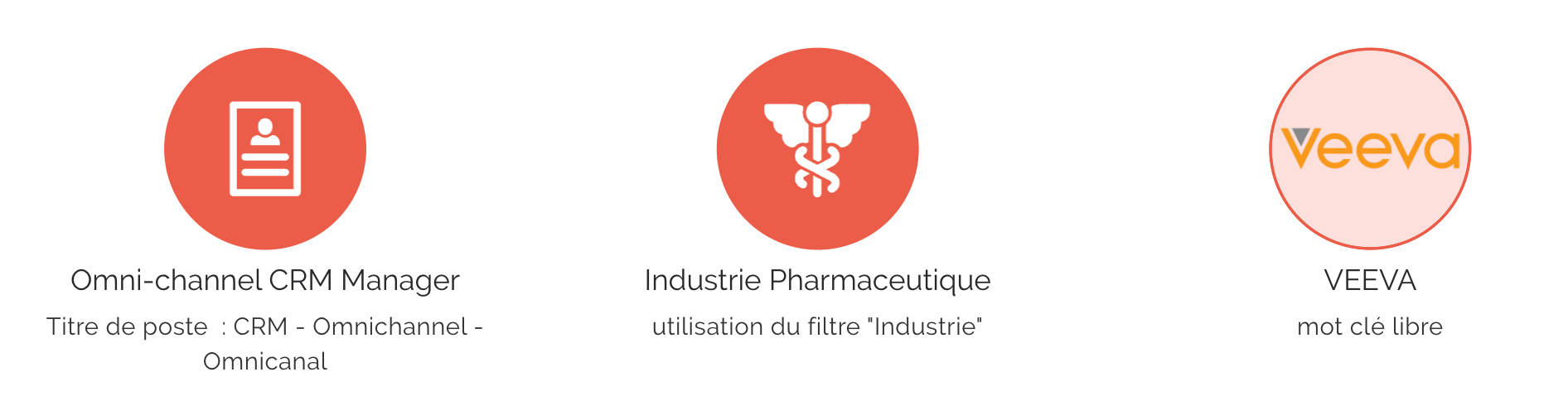
One option is the keyword approach: a few terms like “CRM” or “Omnichannel” in the job title, restricted to the pharma sector, and “Veeva” as a keyword.
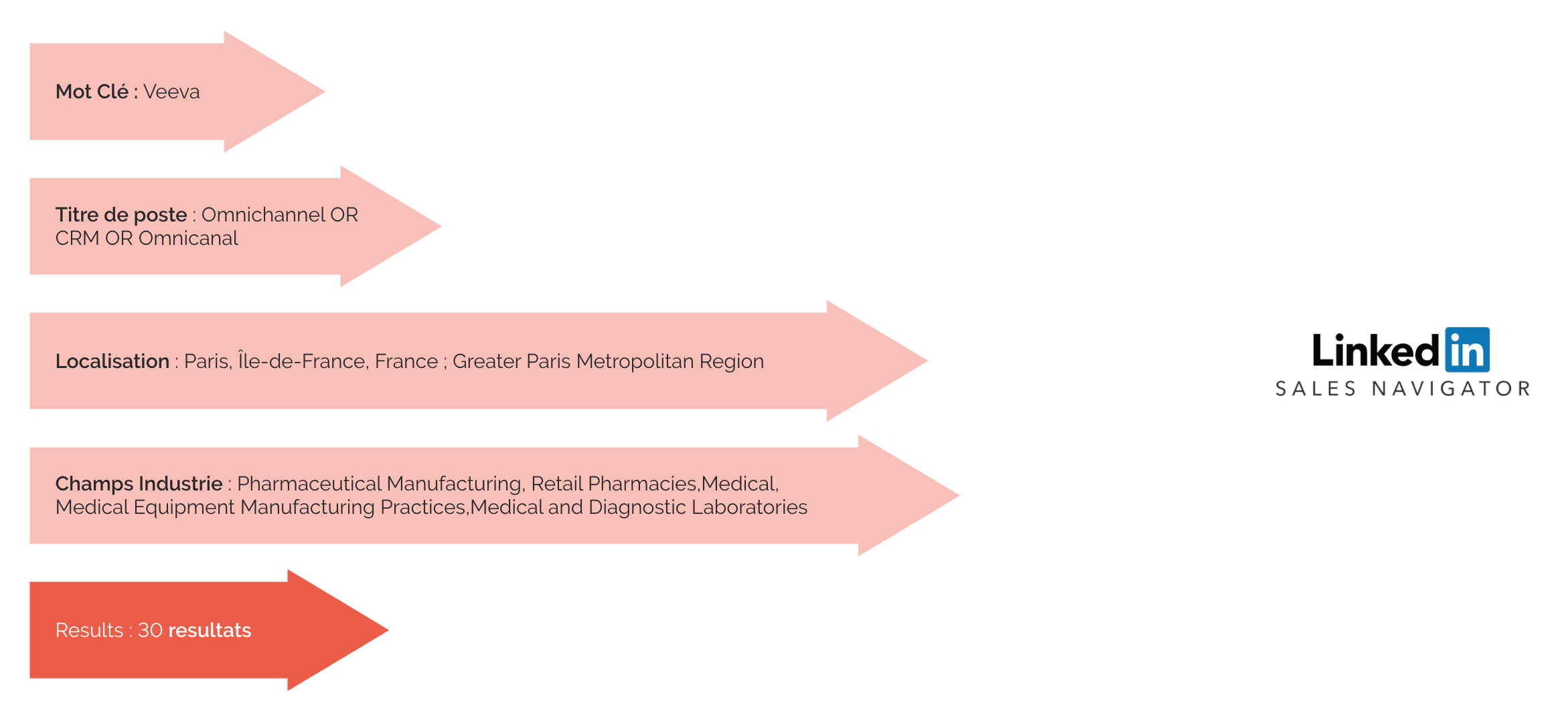
30 people identified — not bad, but do we have all the relevant profiles? This first result is encouraging, yet it risks being insufficient to successfully complete the hire. How can we broaden our search and open up the field of possibilities?
From explicit to implicit: the paradigm shift
Our work environment shapes our skills. This is obvious — yet we tend to forget it when sourcing.
A developer working at Google will, by definition, know Google Cloud Platform, even if that skill doesn’t appear explicitly on their profile.
In our pharma example, rather than searching directly for profiles that mention Veeva, we can:
- Identify companies that use Veeva
- Map the ecosystem of those companies
- Broaden to CRM/Omnichannel profiles within those organisations
The Market Mapping methodology
How to?
How to proceed concretely? Here is my 4-phase approach:
- Investigation phase: understand the environment, tools, and methods of the sector
- Stakeholder mapping: identify key companies and their ecosystem
- Flow analysis: understand typical career paths, bridges between companies
- Targeted sourcing: approach identified profiles with a fine-grained understanding of their context
For the tooling, several options:
- Professional databases (ZoomInfo, Crunchbase…)
- The “Fifth Element” technique (start from 4 obvious competitors to discover a fifth)
- Tools like ChatGPT (connected to the web) or Perplexity.ai for source discovery
A concrete example: the Veeva case
Back to our CRM Manager example. Instead of searching directly for Veeva profiles, we will:
- Identify Veeva clients (on the vendor’s own website)
- Retrieve the names of those companies
- Build a query embedding all those companies
- Pull CRM/Omnichannel profiles from those companies
- Clean and deduplicate the data
- Analyse results in Excel/Google Sheets
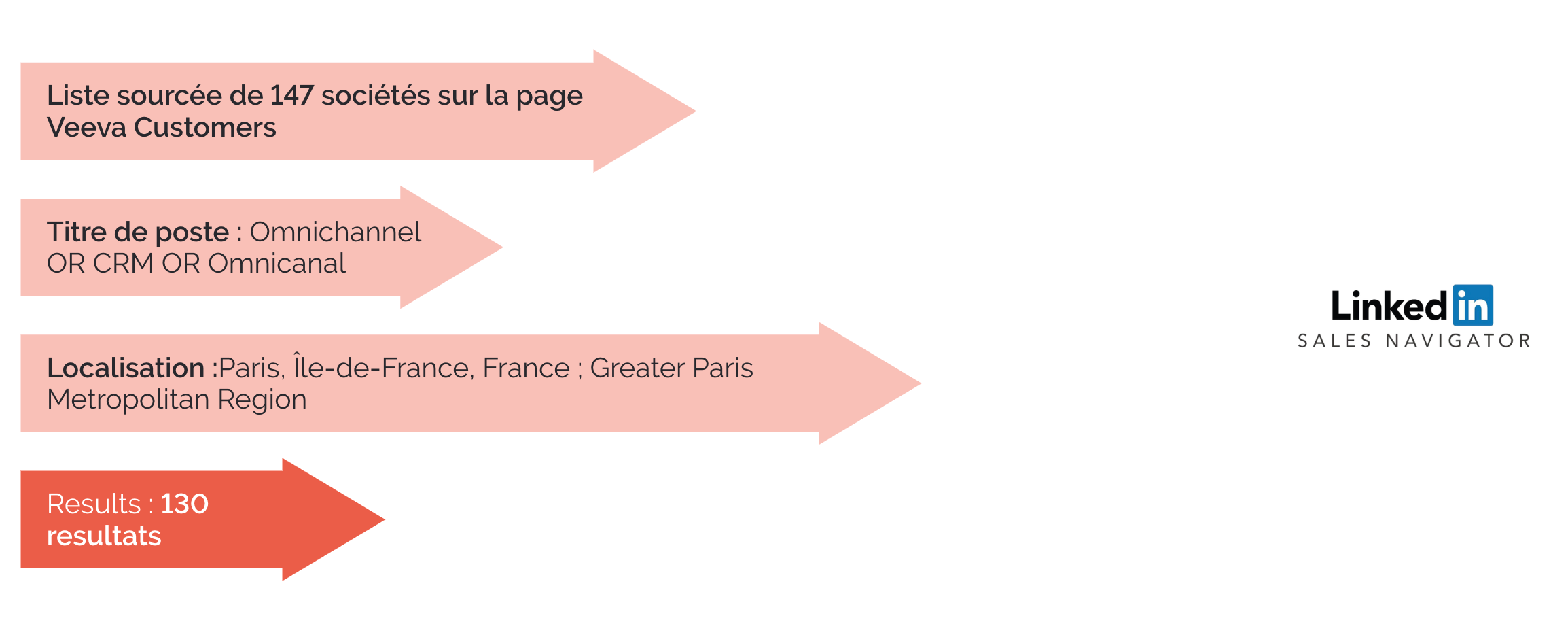
The results obtained through market mapping multiply my initial results by more than 4. After comparing and deduplicating both searches, the final pipeline reaches 138 profiles.
The point is not to pit one approach against the other — but to demonstrate that by sticking solely to a keyword approach without working a broader market strategy, you miss a significant portion of the available talent pool.
Iteration as the key to success
Like any good sourcing process, Market Mapping is not a linear but an iterative approach. Each new discovery enriches the map and sharpens our understanding of the market.
It’s a bit like Thomas, our explorer from the beginning, discovering that each piece found contains a clue to the next treasure…
Beyond sourcing: a strategic tool
Market Mapping is not just a sourcing tool — it’s also a powerful advisory instrument for internal or external clients. It helps to:
- Visualise market trends
- Anticipate developments
- Adjust recruitment strategies
As a bonus, it always makes an impression in a client meeting when you pull out your market map.
The importance of process in Market Mapping
If I insist so much on methodology, it’s because in 25 years of sourcing I’ve seen dozens of “revolutionary” tools come and go, each promising the world. Some were genuinely excellent. But without a solid process, even the best tool is an empty shell.
Here is how I typically structure my Market Mapping approach:
Preparatory phase:
- In-depth needs analysis
- Definition of explicit AND implicit criteria
- Identification of initial information sources
Collection phase:
- Building a database of target companies
- Identifying talent flows between those companies
- Spotting communities and professional associations
Enrichment phase:
- Cross-referencing collected data
- Validating hypotheses
- Refining the map
Exploitation phase:
- Prioritising targets
- Defining personalised outreach approaches
- Launching sourcing campaigns
Market Mapping and personal branding
One often-overlooked aspect of Market Mapping is its impact on your professional positioning.
Presenting a detailed map demonstrates:
- Your deep understanding of the market
- Your capacity for strategic analysis
- Your added value compared to traditional sourcing
I regularly use my maps in client presentations. Not only do they impress — they consistently spark fascinating conversations about market trends.
Pitfalls to avoid in Market Mapping
Like Thomas on his island, there are traps to avoid when getting started with Market Mapping:
The infinite list syndrome: You start with a few companies, then discover connections, competitors, partners… and before long your map looks like a phone book. Define your boundaries from the start.
Analysis paralysis: “Just a bit more research and I’ll be ready…” How many times have I heard that? Market Mapping is an iterative process, not a doctoral thesis. Start with what you have — you’ll refine as you go.
The tunnel effect: Focusing only on one sector or type of company. Talent can come from surprising backgrounds. I recently placed an excellent Product Owner at a fintech — he came from the luxury sector.
The tool dictatorship: Choosing your tools before defining your process. That’s like buying a drill without knowing what you want to hang on the wall. Define your method first; the tools will follow.
Market Mapping is a bit like Thomas’s treasure map: it’s only as good as how you use it. It’s not the map that makes the explorer — it’s the ability to see beyond the marked points. So next time you start a search, take the time to map your hunting ground. The most precious treasures are often hiding exactly where nobody thought to look.
Happy sourcing and happy mapping!
Still searching for your hidden treasure? Let’s talk. Whether it’s building a clear map or identifying invisible talent, I’d be happy to explore your mapping needs with you.
Corpus · envois mensuels
Lire la suite par email.
Sourcing, méthode, gouvernance. Un envoi par mois, jamais plus. Articles longs, sans script ni sponsor. Désinscription en un clic.